
At Firm Foundation Integrative Health, Frequency Specific Microcurrent (FSM) is offered as a complementary approach to help address pain, support recovery, and improve movement as part of an individualized care plan.
FSM uses very low-level electrical currents delivered through electrodes placed on the skin. What makes this approach unique is the use of selected electrical frequencies based on the tissue or condition being addressed. Rather than using the same settings for every person, the practitioner selects specific frequency combinations according to the goals of the session.
FSM may be used for people experiencing acute or chronic injuries, persistent musculoskeletal discomfort, limited mobility, or other concerns for which a complementary approach to pain management and recovery may be appropriate.
Our goal is to help you understand how FSM works, what research suggests about microcurrent therapy, and whether it may be a useful addition to your overall care.
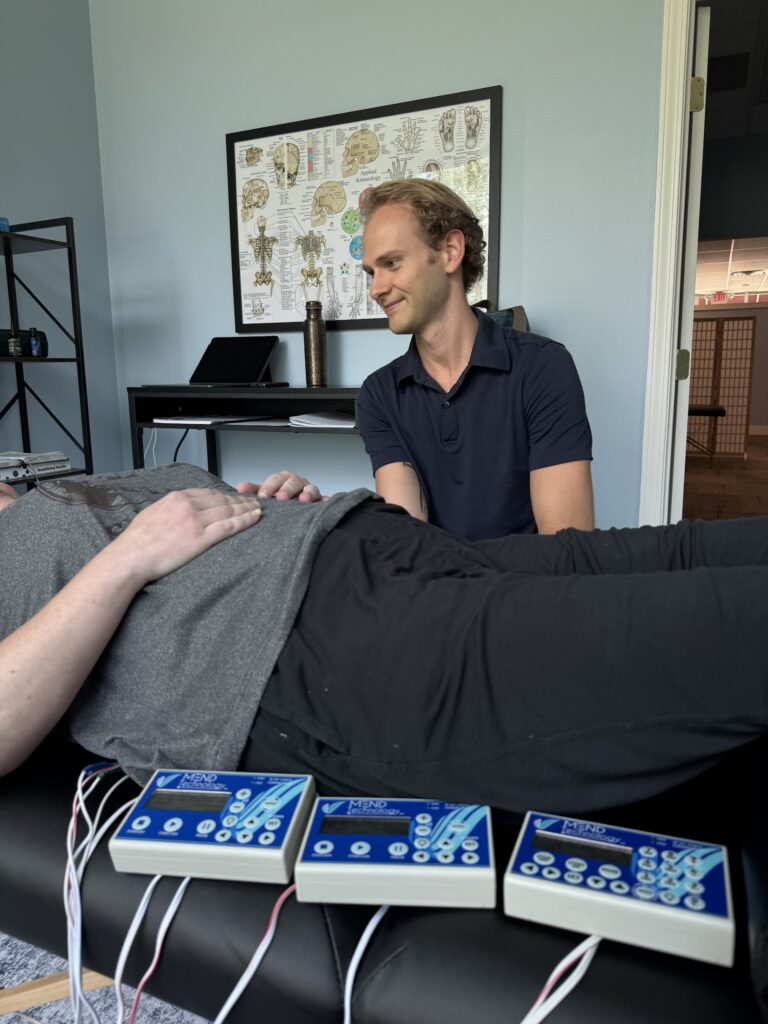
Microcurrent therapy uses electrical currents measured in microamperes (µA)—very small amounts of current. FSM is a specialized approach that combines low-level electrical stimulation with selected frequencies that practitioners associate with particular tissues or treatment goals.
Unlike conventional electrical stimulation methods such as TENS, which typically use stronger currents and are often intended to stimulate sensory nerves for pain relief, microcurrent is delivered at much lower intensities. You may feel very little sensation during an FSM session.
The approach is based on the idea that electrical activity plays an important role in how cells communicate and how the body responds to injury. Researchers have investigated whether externally applied microcurrents can influence cellular processes involved in pain and tissue repair.
At Firm Foundation Integrative Health, we approach FSM thoughtfully and use it as one part of a broader plan based on your presentation, goals, and response to care.
Your body relies on electrical and chemical signals to coordinate many functions. Nerves communicate through electrical impulses, cells maintain electrical gradients across their membranes, and naturally occurring electrical fields can play a role in processes such as wound healing.
When tissue is injured, the body initiates a complex healing response involving inflammation, cellular signaling, tissue repair, and remodeling. Researchers are investigating whether microcurrent stimulation can influence some of these processes.
Within the FSM model, different frequencies are selected according to the type of tissue or condition being addressed. The practitioner uses these settings as part of an individualized treatment protocol, with the intention of supporting the body’s response to the particular concern.
One way to picture this concept is to think about tuning a guitar. In using this analogy we can understand how the FSM model can be described.
When a guitar string is out of tune, it no longer produces the intended note. Adjusting the string brings its pitch back into alignment. In a similar way, the FSM model uses the idea of selecting a particular frequency to help support a tissue’s return toward a healthier state.
Research on microcurrent electrical stimulation has reported changes in cellular processes associated with tissue repair. These include:
ATP production: ATP is the primary energy-carrying molecule used by cells.
Protein synthesis: Proteins are essential for maintaining and rebuilding tissue.
Amino acid transport: Amino acids are building blocks used to make proteins.
Collagen production: Collagen is an important structural protein in connective tissues, including tendons, ligaments, skin, and other supporting structures.
Inflammation-related signaling and pain: Effects on endorphins, which are chemicals produced by the body that are involved in pain modulation, and prostaglandins, which are signaling substances involved in inflammation.
People may seek FSM as a complementary option for a variety of concerns and conditions, particularly those involving musculoskeletal pain and recovery.
FSM may be incorporated as a complementary approach to support comfort, tissue recovery, and function as part of an individualized care plan. The following list includes a range of conditions and symptoms that may be considered when determining whether FSM is appropriate.
Acute and chronic muscle pain
Lower back, upper back, and neck pain
Sciatica and radiating pain
Peripheral neuropathy and nerve-related pain
Postherpetic neuralgia (persistent nerve pain following shingles)
Complex regional pain syndrome (CRPS), historically called reflex sympathetic dystrophy (RSD)
Fibromyalgia
Myofascial pain and trigger points
Spinal disc-related pain and herniation
Postsurgical pain
Temporomandibular joint (TMJ) pain
Tension headaches and migraines
Muscle weakness and neuromuscular dysfunction
Muscle tension, altered muscle tone, and movement limitations
Sports injuries
Muscle strains and ligament sprains
Tendon injuries and tendinitis, including Achilles tendinitis
Bursitis
Osteoarthritis and other joint-related pain
Frozen shoulder
Carpal tunnel syndrome
Tennis elbow
Whiplash-associated discomfort
Fracture recovery
Scar tissue and tissue adhesions
Postsurgical soft-tissue restrictions
Myofascial restrictions
Reduced mobility associated with pain or soft-tissue limitations
Support for tissue recovery following selected injuries
Neck pain and muscle tension
Concussion-related symptoms
Traumatic brain injury (TBI)-related symptoms
Sinus discomfort and sinusitis-related symptoms
Small intestinal bacterial overgrowth (SIBO)
Intestinal permeability ("leaky gut")
Diverticulosis and diverticulitis
Irritable bowel syndrome (IBS)
Colitis and other inflammatory bowel conditions
Gastroesophageal reflux (GERD) and chronic heartburn
Digestive discomfort and abdominal pain
Intestinal and abdominal adhesions
Bloating and digestive discomfort
Pelvic pain and associated soft-tissue discomfort
Endometriosis, uterine fibroids, and ovarian cysts
FSM may also be considered as a complementary approach to support comfort and function in individuals living with neurological conditions. These may include:
Parkinson's disease
Multiple sclerosis (MS)
Amyotrophic lateral sclerosis (ALS)
Stroke and post-stroke symptoms
Traumatic brain injury (TBI)
Neurological pain and nerve-related symptoms
Muscle stiffness, spasticity, and altered muscle tone
Neuromuscular movement limitations
At Firm Foundation Integrative Health, our broader approach considers five factors that may be relevant to a person’s overall well-being: physical, chemical, emotional, neurological, and bioelectric or electrical. Our faith in Jesus Christ is the foundation for how we seek to serve each person.
FSM most directly relates to the bioelectric or electrical factor because it uses low-level electrical stimulation as a complementary modality. However, the other factors may also be relevant to your care. For example, physical therapy may address movement and function, while other health concerns may warrant nutritional discussion or further medical evaluation.
Depending on your needs, FSM may be used alongside physical therapy, myofascial techniques, or other appropriate services. Not every person needs every modality, and our recommendations are guided by your goals, clinical presentation, and response to care.
To learn more about the five factors that inform our approach and the faith that serves as our foundation, visit our Our Approach page.
Your session begins with a discussion of your current concerns, relevant health history, and goals. We will review whether FSM is appropriate and explain the intended purpose of the session.
Electrodes are placed on selected areas of the body, and the device delivers the chosen microcurrent settings for the planned duration. You can generally rest comfortably during treatment, and the current may be barely perceptible.
Sessions may be scheduled independently or incorporated into a broader plan of care when appropriate. We will discuss your experience and any changes you notice rather than assuming a particular response.
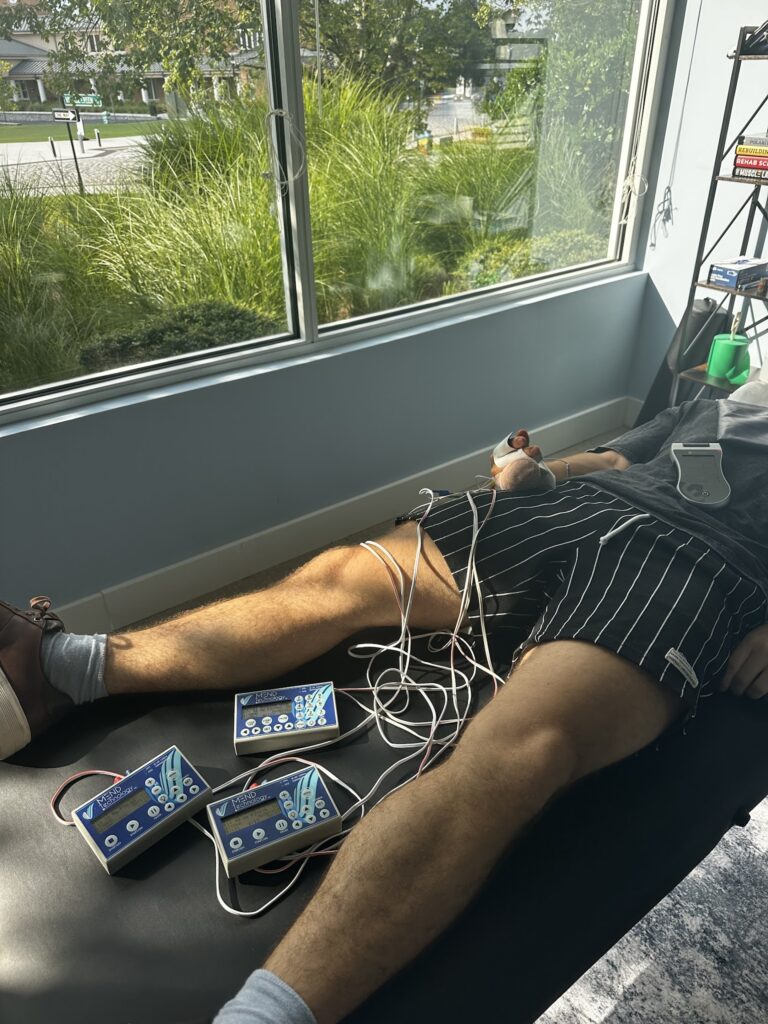
At Firm Foundation Integrative Health, we look at the individual rather than assuming one technique is the answer for everyone. FSM may complement:
Integrative Physical Therapy — movement assessment, manual care, and individualized rehabilitation.
Applied Kinesiology — neuromuscular assessment used alongside other clinical findings.
Nutritional Support & Lab Testing — when additional information about nutritional or biochemical concerns is appropriate.
Each service has a different role. Dr. Josiah will discuss which approaches are relevant to your goals and which may not be necessary.
We believe our bodies are gifts from God and that caring for them is an opportunity to serve Him and others. Our mission is to help people pursue health and wellness with hope, compassion, and a firm foundation in Jesus Christ.
FSM is one tool within that mission. We do not promise a particular outcome; instead, we provide thoughtful, individualized care and reassess how each intervention fits your needs.
If you are interested in learning more about Frequency Specific Microcurrent, contact us to discuss your goals and whether a session may be appropriate for your situation.
Book NowRelated Services: Integrative Physical Therapy · Applied Kinesiology · Nutritional Support & Lab Testing · Our Approach
External resource: Visit FrequencySpecific.com for additional information about FSM, its principles, and published research.