
At Firm Foundation Integrative Health, we believe God created the human body with an incredible capacity to adapt, respond, and heal. However, when the body's systems are under stress or not communicating effectively, it can become more difficult to move well, recover from injury, and maintain overall health. Applied Kinesiology is one of the assessment approaches Dr. Josiah uses to explore these patterns and help guide individualized care. By combining manual muscle testing with other clinical assessments and treatment approaches, we seek to better understand how your body responds to movement, physical stress, and different forms of sensory input.
Rather than looking at pain or dysfunction as an isolated problem, Applied Kinesiology encourages us to consider how the body's structural, neurological, chemical, and emotional systems may interact. When appropriate, it may be incorporated alongside physical therapy, neurological retraining, myofascial techniques, nutritional considerations, and Frequency Specific Microcurrent.
Our goal is to look beyond the immediate symptom, understand the individual in front of us, and determine which approaches may best support their health and function.
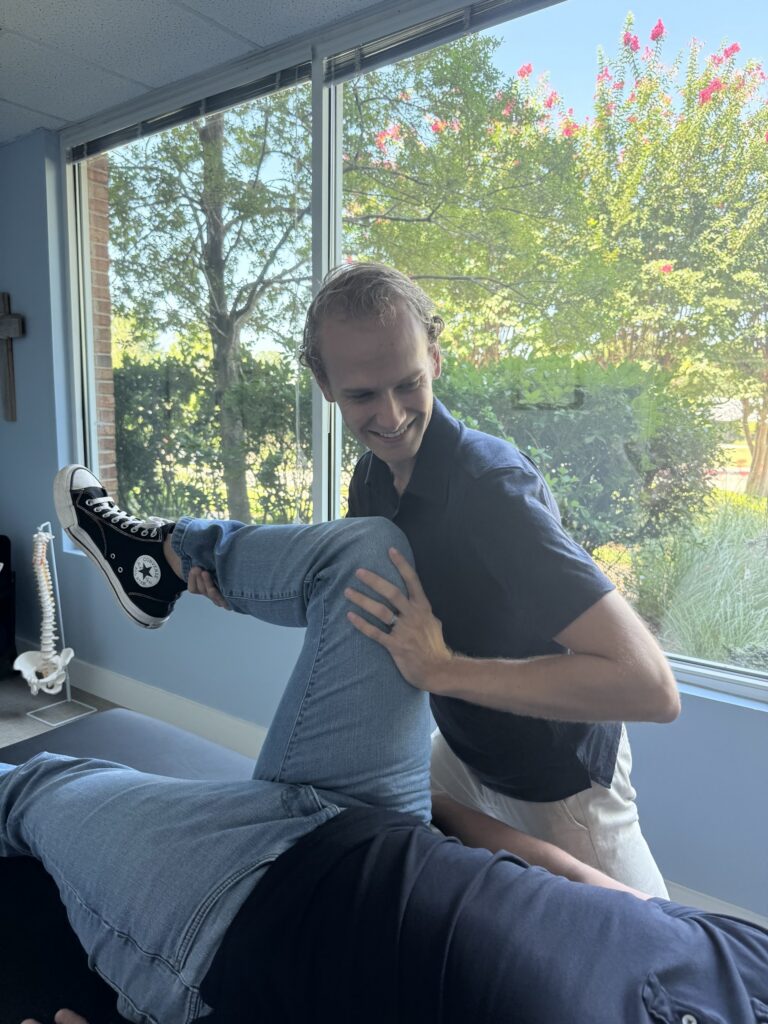
Applied Kinesiology is an assessment and treatment approach that uses manual muscle testing alongside other clinical methods. It was developed by chiropractor George Goodheart in the 1960s and is used by some healthcare practitioners as part of an integrative model of care.
Manual muscle testing involves applying controlled pressure to a muscle or body position and observing how the person responds. Muscle performance can be influenced by many factors, including nervous system function, pain, fatigue, positioning, coordination, and sensory input.
Within the Applied Kinesiology framework, practitioners may also consider traditional associations between muscles, organs, nutritional factors, and acupuncture meridians. These concepts can help explain how AK practitioners organize their assessments, but the specific associations and diagnostic claims are not established as reliable ways to identify organ disease, nutritional deficiencies, or emotional conditions. Muscle testing is therefore considered alongside the person's history, examination, and other appropriate clinical information rather than used as a stand-alone diagnostic test.
The body does not function as a collection of isolated parts. Movement, sensation, balance, stress, sleep, nutrition, and overall health can all influence how a person feels and functions.
Within the AK model, several areas may be considered during an assessment.
One distinctive aspect of Applied Kinesiology is its traditional framework for exploring relationships between muscles, internal organs, and the body's regulatory systems.
AK incorporates concepts from viscerosomatic relationships—the connections between internal organs and the nervous system's influence on muscles and other structures. For example, certain internal conditions can produce referred pain, changes in muscle guarding, or altered movement patterns. These are recognized clinical phenomena that may be relevant when evaluating a person's presentation.
AK also uses a more specific set of traditional muscle-organ associations. Within this framework, particular muscles are associated with particular organs or organ systems, and changes in a muscle's response may prompt the practitioner to explore related areas of function. These associations are informed in part by the traditional Chinese medicine meridian system.
Applied Kinesiology also incorporates concepts from Traditional Chinese Medicine (TCM), particularly the system of acupuncture meridians and associated acupoints.
In Traditional Chinese Medicine, meridians are described as pathways through which the body's vital energy, or qi, circulates. These pathways are associated with different organs and functional relationships and contain specific points that have traditionally been used in acupuncture and acupressure.
Within certain Applied Kinesiology methods, individual muscles are associated with particular meridians. The practitioner may assess a muscle's response before and after applying gentle pressure to selected acupoints or other areas of the body. This process, sometimes called therapy localization or meridian point assessment, is used within the AK framework to explore whether a particular stimulus changes the muscle's response.
The purpose is to consider the body's response to different inputs rather than relying on one isolated test. Depending on the findings and the practitioner's training, care may incorporate gentle acupressure, stimulation of selected reflex points, manual therapy, or other appropriate techniques.
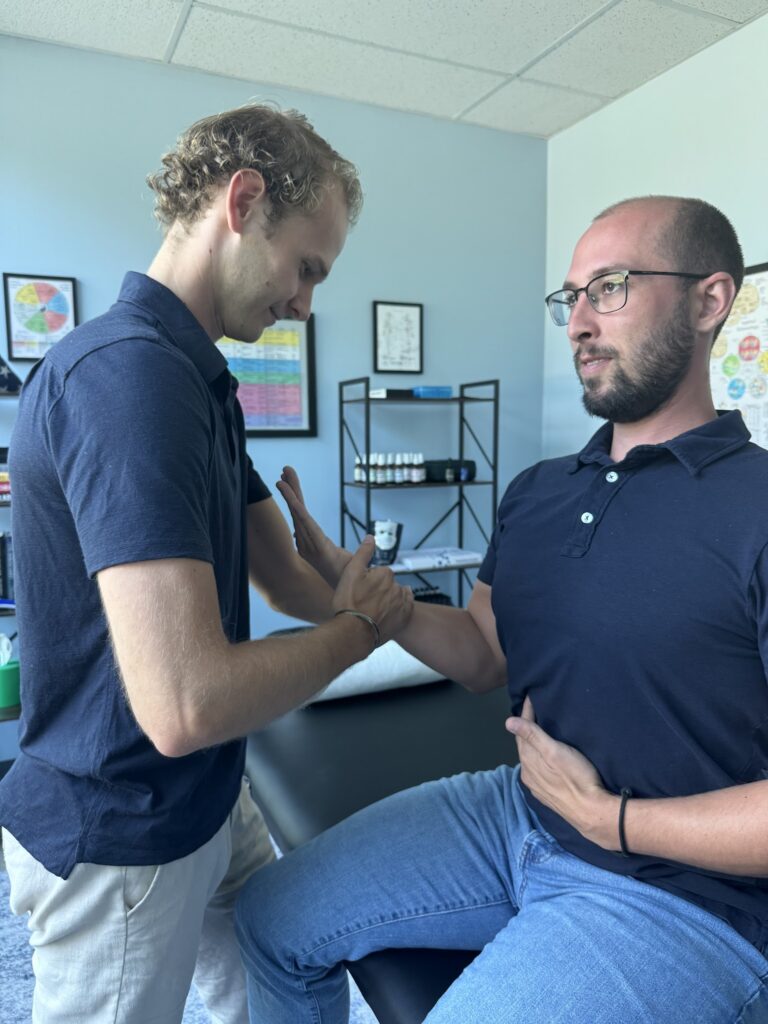
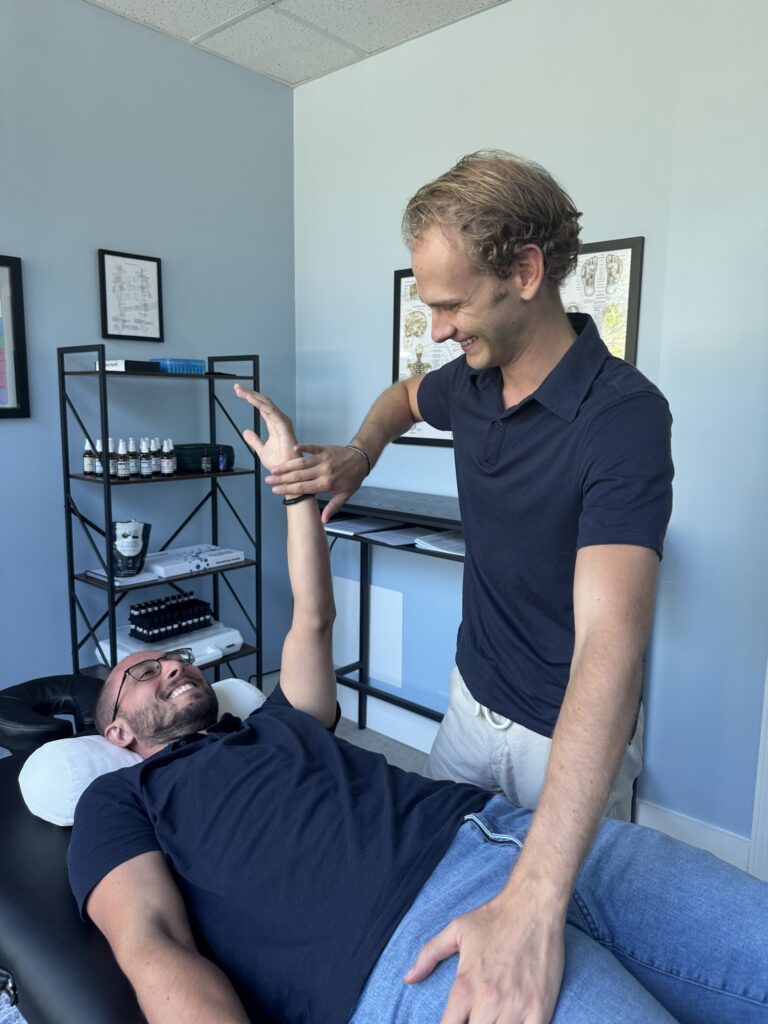
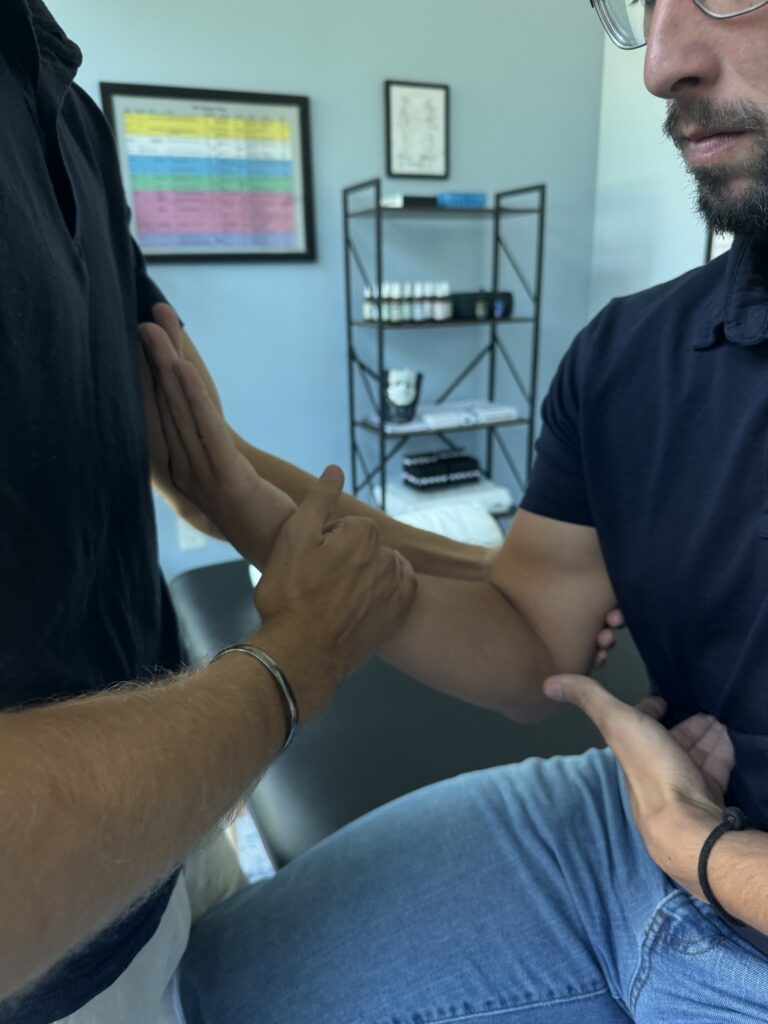
At Firm Foundation Integrative Health, Applied Kinesiology is one of the tools Dr. Josiah uses within our broader, whole-person approach to care. By combining manual muscle testing with appropriate clinical assessments, we seek to better understand neuromuscular function and identify areas that may warrant further evaluation.
Depending on your individual needs, this approach may be complemented by musculoskeletal assessment, neurological retraining, myofascial techniques, nutritional considerations, or Frequency Specific Microcurrent. Traditional muscle-organ associations and meridian concepts may also inform the AK framework, while findings are interpreted alongside other clinical information rather than used as stand-alone diagnostic tests.
Our goal is to look beyond an isolated symptom, consider relevant contributing factors, and develop an individualized plan based on your needs and goals.
Our approach is grounded in our faith in Jesus Christ, which shapes how we listen, serve, and care for every person. To learn more about the five factors that inform our care and the faith that serves as our foundation, visit Our Approach.
Your first visit begins with a conversation about your health history, current concerns, previous care, and goals. Dr. Josiah will then determine which assessments are appropriate for your situation.
Applied Kinesiology is one tool within our broader approach to integrative care. Depending on your needs, Dr. Josiah may combine elements of AK with:
Structural and musculoskeletal assessment: Evaluating posture, joint mobility, movement patterns, muscle function, and soft-tissue restrictions.
Neurological and sensory-motor assessment: Considering coordination, proprioception, balance, and the nervous system's role in movement and muscle performance.
Meridian and acupressure techniques: Incorporating selected traditional acupoints and gentle pressure techniques when appropriate to the assessment and within professional scope.
Myofascial and manual therapy: Addressing relevant soft-tissue restrictions, movement limitations, and musculoskeletal discomfort.
Nutritional considerations: Exploring dietary habits and possible nutritional concerns, with laboratory testing or appropriate medical evaluation when objective information is needed.
Frequency Specific Microcurrent: Considering low-level microcurrent as an adjunct to an individualized treatment plan when appropriate.
Emotional and stress-related considerations: Recognizing that stress and life experiences may influence muscle tension, movement, sleep, and the experience of pain, without assuming that every physical symptom has an emotional cause.
Our goal is to bring together relevant findings, identify practical areas to address, and develop a plan that fits the individual rather than forcing the individual into a predetermined treatment protocol.
People may seek an integrative assessment when they are experiencing:
Musculoskeletal Pain and Recurring Injuries: Persistent back or neck pain, muscle and joint discomfort, recurring strains, postural concerns, movement restrictions, or difficulty recovering after an injury.
Neurological and Sensory-Motor Concerns: Changes in balance, coordination, body awareness, movement control, or physical function. Some individuals may also seek complementary support as part of a broader rehabilitation plan for concussion-related symptoms or other neurological conditions.
Headaches and Migraines: Recurring headaches, migraines, jaw tension, or neck-related discomfort where musculoskeletal, movement, or other contributing factors may warrant assessment.
Digestive and Gastrointestinal Concerns: Individuals experiencing bloating, constipation, reflux, abdominal discomfort, or other persistent digestive symptoms who want to discuss how their overall health, nutrition, and lifestyle may relate to their well-being.
Persistent Fatigue and Low Energy: People experiencing ongoing tiredness, reduced exercise tolerance, or difficulty returning to their usual activities who would benefit from a comprehensive review and appropriate medical evaluation.
Stress and Emotional Well-Being: Individuals whose stress, tension, or emotional experiences may be affecting their pain, sleep, physical function, or ability to participate in rehabilitation.
Nutritional and Dietary Questions: People seeking guidance about dietary patterns, nutritional habits, or whether further nutritional assessment or laboratory testing may be appropriate.
Complex or Persistent Health Concerns: Individuals managing several ongoing symptoms or diagnoses who want a coordinated, whole-person perspective alongside their existing medical care.
Recovery and Rehabilitation Challenges: People who feel stuck in their recovery, have difficulty progressing with exercise or rehabilitation, or want an individualized approach that considers more than the location of their symptoms.
General Wellness and Functional Goals: Individuals interested in improving movement, physical resilience, daily function, and health habits through an individualized care plan.
At Firm Foundation Integrative Health, we believe our ability to serve others is a gift from Jesus Christ. Our faith inspires us to approach every person with humility, compassion, and a desire to care for the whole person.
Applied Kinesiology is one tool within that mission—not a replacement for sound clinical judgment. We seek to combine careful assessment, individualized treatment, and a respect for God's design while helping each person build a firmer foundation for health and wellness.
If you are interested in learning whether an Applied Kinesiology-informed approach may be appropriate for your needs, we invite you to schedule an initial evaluation.
Book NowRelated Services: Integrative Physical Therapy · Frequency Specific Microcurrent · Nutritional Support & Lab Testing · Our Approach
External resource: The International College of Applied Kinesiology – USA (ICAK-USA) provides additional information about the history, principles, and professional practice of Applied Kinesiology.