
Jaw pain can affect much more than your ability to chew. It may interfere with speaking, eating, sleeping, exercising, and enjoying everyday life. For some people, symptoms come and go. For others, jaw discomfort, facial tension, headaches, or restricted movement become persistent and frustrating.
At Firm Foundation Integrative Health, we take an individualized approach to temporomandibular joint (TMJ) and temporomandibular disorder (TMD) concerns. Our goal is to understand how your jaw functions, identify relevant physical and lifestyle factors, and develop a care plan tailored to your needs.
Dr. Josiah Bartlett, PT, DPT, may incorporate physical therapy, Applied Kinesiology-informed assessment, Frequency Specific Microcurrent (FSM), and nutritional discussions when appropriate. We also recognize that stress and emotional well-being can influence muscle tension, pain, and recovery.
Our approach is designed to complement appropriate dental and medical care while helping you work toward more comfortable movement and improved daily function.
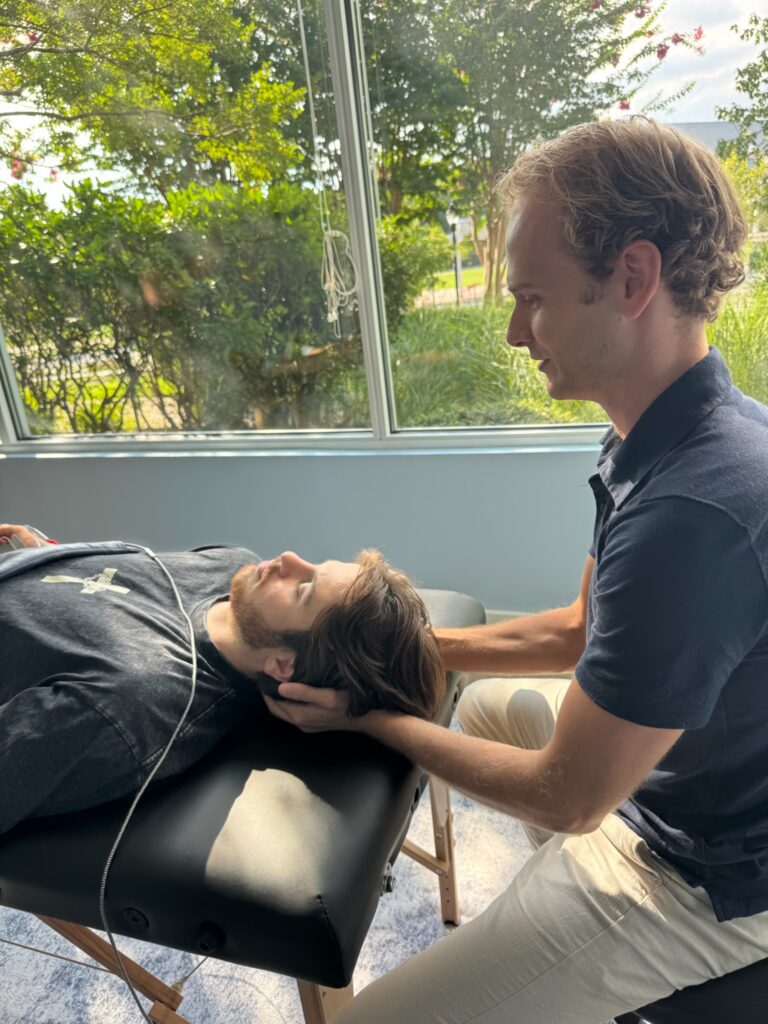
The temporomandibular joints connect your lower jaw to your skull, just in front of each ear. These joints work together with the muscles, ligaments, and other tissues surrounding them to help you chew, speak, yawn, and open and close your mouth.
The term TMJ refers to the joint itself, while temporomandibular disorders (TMDs) describes a group of conditions affecting the jaw joints, chewing muscles, and related structures.
TMJ-related symptoms can arise from different sources, including muscular pain, joint irritation, movement restrictions, clenching, grinding, or other contributing factors. Neck discomfort, headaches, stress, and sleep difficulties may also occur alongside jaw symptoms.
Because several conditions can cause similar symptoms, a proper assessment is important to determine which treatment approaches may be appropriate.
TMJ-related concerns can look different from person to person. Symptoms may include:
Pain or tenderness around the jaw joint, cheeks, or temples
Tightness or fatigue in the chewing muscles
Difficulty opening the mouth fully
Pain while chewing, speaking, or yawning
Jaw clicking or popping accompanied by pain or functional limitations
Episodes of jaw locking or restricted movement
Headaches or facial pain associated with jaw symptoms
Neck tension or discomfort that occurs alongside jaw pain
Clenching or grinding habits that contribute to muscle soreness
Clicking or popping without pain or loss of function is common and does not necessarily require treatment. Persistent pain, locking, or difficulty eating warrants appropriate professional evaluation.
The jaw does not function in isolation. Its movement depends on coordinated activity among the jaw muscles, joints, neck, and nervous system. Daily habits, sleep, stress, and general health can also influence how symptoms develop and persist.
For some individuals, addressing jaw movement alone may be sufficient. Others may benefit from a broader plan that considers several contributing factors.
At Firm Foundation Integrative Health, we consider five factors in our broader approach to care: physical, chemical, emotional, neurological, and bioelectric or electrical. Our Christian faith serves as the foundation for how we care for each person. Our Approach
Not every person needs every service. We select approaches based on your history, examination findings, goals, and response to care.
Physical therapy focuses on the movement, strength, coordination, and function of the jaw and surrounding structures.
Depending on your presentation, treatment may include:
Jaw movement assessment: Evaluating comfortable mouth opening, movement control, and functional limitations.
Neck and postural assessment: Exploring whether neck mobility, muscle tension, or movement habits may contribute to your symptoms.
Manual therapy: Using appropriate hands-on techniques to address muscle tenderness, soft-tissue restrictions, and movement limitations.
Jaw and cervical exercises: Selecting gentle mobility, coordination, stretching, or strengthening exercises according to your needs.
Habit and activity guidance: Discussing ways to reduce unnecessary jaw loading, such as habitual clenching or excessive gum chewing.
Progressive functional retraining: Helping you gradually return to comfortable chewing, speaking, exercise, and other meaningful activities.
Your plan will be individualized rather than based on a generic exercise list. We monitor your response and adjust treatment as your symptoms and function change.
Applied Kinesiology (AK) uses manual muscle testing alongside other assessment methods. Within our integrative approach, AK-informed techniques may be incorporated with a broader physical examination to help guide individualized care.
For someone experiencing jaw pain, the assessment may also consider the muscles of the jaw, neck, and shoulders, movement patterns, and other relevant physical findings.
AK may be used as one component of the overall session to explore possible contributing factors, including associated organ relationships or nutritional considerations. Any recommendations are considered alongside your history, clinical examination, and other appropriate information.
Frequency Specific Microcurrent uses very low-level electrical currents with selected frequency settings. At Firm Foundation Integrative Health, FSM may be considered as a complementary option when jaw-related muscle discomfort or other pain symptoms are part of your presentation.
Depending on your needs and the suitability of treatment, FSM may be incorporated with the goal of:
Supporting pain management
Addressing muscular discomfort or tension
Helping make movement and rehabilitation more comfortable
Complementing other strategies for improving jaw function
Nutrition is one part of overall health and may be relevant to your comfort, recovery, and ability to participate in rehabilitation. We can discuss dietary habits and general nutritional considerations within the context of your individual needs.
Depending on your circumstances, this conversation may include:
Adequate nourishment: Reviewing whether your usual eating pattern supports your overall health and activity needs.
Eating comfortably during a flare-up: Discussing temporary food-texture modifications when chewing is painful, while maintaining adequate nutrition.
General dietary patterns: Considering overall eating habits and whether they support your broader health goals.
Further evaluation when indicated: Discussing whether persistent symptoms or other health concerns warrant medical assessment or appropriate laboratory testing.
The jaw muscles can respond to stress, and some people clench their teeth or tighten their jaw without realizing it. Stress, poor sleep, and ongoing pain may also influence how symptoms are experienced and managed.
Our approach recognizes that emotional well-being matters alongside physical function. When appropriate, we may discuss:
Awareness of daytime clenching and jaw tension
Relaxation strategies and habits that encourage a more comfortable resting jaw position
The relationship between stress, sleep, muscle tension, and pain
Practical ways to support recovery and manage symptom flare-ups
Your first visit begins with a conversation about your symptoms, health history, previous care, daily habits, and goals. We will discuss what makes your symptoms better or worse and how they affect your everyday activities.
Your physical assessment may include jaw movement, neck mobility, relevant muscle function, posture, and other measures appropriate to your presentation. We will explain our findings and discuss which approaches may be suitable for your situation.
Together, we will establish priorities and develop an individualized plan. This may involve physical therapy alone or a combination of services when appropriate. We will also discuss whether coordination with your dentist, physician, or another healthcare professional is recommended.
An integrative assessment may be worth considering if you experience:
Recurring jaw pain or chewing muscle tension
Restricted or uncomfortable jaw movement
Jaw symptoms accompanied by neck tension or headaches
Jaw discomfort that interferes with eating, speaking, or daily activities
Persistent symptoms that have not improved as expected
Difficulty identifying habits or movement patterns that aggravate your symptoms
A desire for individualized care that considers physical function and relevant lifestyle factors
The right approach depends on the cause of your symptoms.
At Firm Foundation Integrative Health, our faith in Jesus Christ shapes how we listen, serve, and care for each person. We believe every individual deserves compassion, dignity, and thoughtful attention.
Our goal is to help you better understand your symptoms, explore appropriate options, and take practical steps toward improved comfort and function. We seek to honor God through individualized care while respecting the role of appropriate clinical evidence and collaboration with other healthcare professionals.
If jaw pain, facial tension, or restricted movement is affecting your daily life, we invite you to schedule an initial evaluation. We will listen to your concerns, assess your needs, and discuss whether our integrative approach may be a good fit.
Book NowExplore related services: Integrative Physical Therapy · Applied Kinesiology · Frequency Specific Microcurrent · Nutritional Support & Lab Testing · Inner Healing & Prayer